A dramatic three-door sideboard in highly figured Macassar ebony, executed by the atelier of Adolphe De Beyne in Roubaix, France, in the 1930s-40s. Stamped A. De Beyne, Roubaix to the interior.
The piece is composed of three doors of contrasting treatment: two flanking doors fronted with deep "waves" of Macassar ebony, the verticals reading as a rippling curtain of high-contrast figuring, and a central door treated as a flat panel and centered by a scrolling brass-inlaid cartouche. The whole rests on a sculptural sleigh-form base of curved feet accented with brass.
Each door opens to a fitted interior of pale sycamore with adjustable shelving; one compartment further contains a single drawer fitted with a cut-glass and gilt-mirrored pull. All three original keys are present and functional.
The contrast between the rippled flanking doors and the flat brass-inlaid center, and between the warm Macassar above and the dark lacquered base below, is the piece's defining gesture — the kind of confident formal play that characterizes the best of late French Art Deco cabinetwork.
Adolphe De Beyne (born 1884, Waregem, Belgium) established his Roubaix workshop in 1906, producing furniture under the slogan Les meubles d'art De Beyne. The firm exhibited at international expositions in Paris, Lille, and Brussels, taking medals at each, and remained active into the late 20th century. Roubaix, an industrial city in northern France with deep textile-trade wealth, supported a sophisticated regional clientele for high-quality cabinetwork in the Art Deco period, and De Beyne's pieces are characterized by a confident handling of exotic veneers and a refined sense of proportion that situates them within the broader French Art Deco tradition.
A dramatic three-door sideboard in highly figured Macassar ebony, executed by the atelier of Adolphe De Beyne in Roubaix, France, in the 1930s-40s. Stamped A. De Beyne, Roubaix to the interior.
The piece is composed of three doors of contrasting treatment: two flanking doors fronted with deep "waves" of Macassar ebony, the verticals reading as a rippling curtain of high-contrast figuring, and a central door treated as a flat panel and centered by a scrolling brass-inlaid cartouche. The whole rests on a sculptural sleigh-form base of curved feet accented with brass.
Each door opens to a fitted interior of pale sycamore with adjustable shelving; one compartment further contains a single drawer fitted with a cut-glass and gilt-mirrored pull. All three original keys are present and functional.
The contrast between the rippled flanking doors and the flat brass-inlaid center, and between the warm Macassar above and the dark lacquered base below, is the piece's defining gesture — the kind of confident formal play that characterizes the best of late French Art Deco cabinetwork.
Adolphe De Beyne (born 1884, Waregem, Belgium) established his Roubaix workshop in 1906, producing furniture under the slogan Les meubles d'art De Beyne. The firm exhibited at international expositions in Paris, Lille, and Brussels, taking medals at each, and remained active into the late 20th century. Roubaix, an industrial city in northern France with deep textile-trade wealth, supported a sophisticated regional clientele for high-quality cabinetwork in the Art Deco period, and De Beyne's pieces are characterized by a confident handling of exotic veneers and a refined sense of proportion that situates them within the broader French Art Deco tradition.

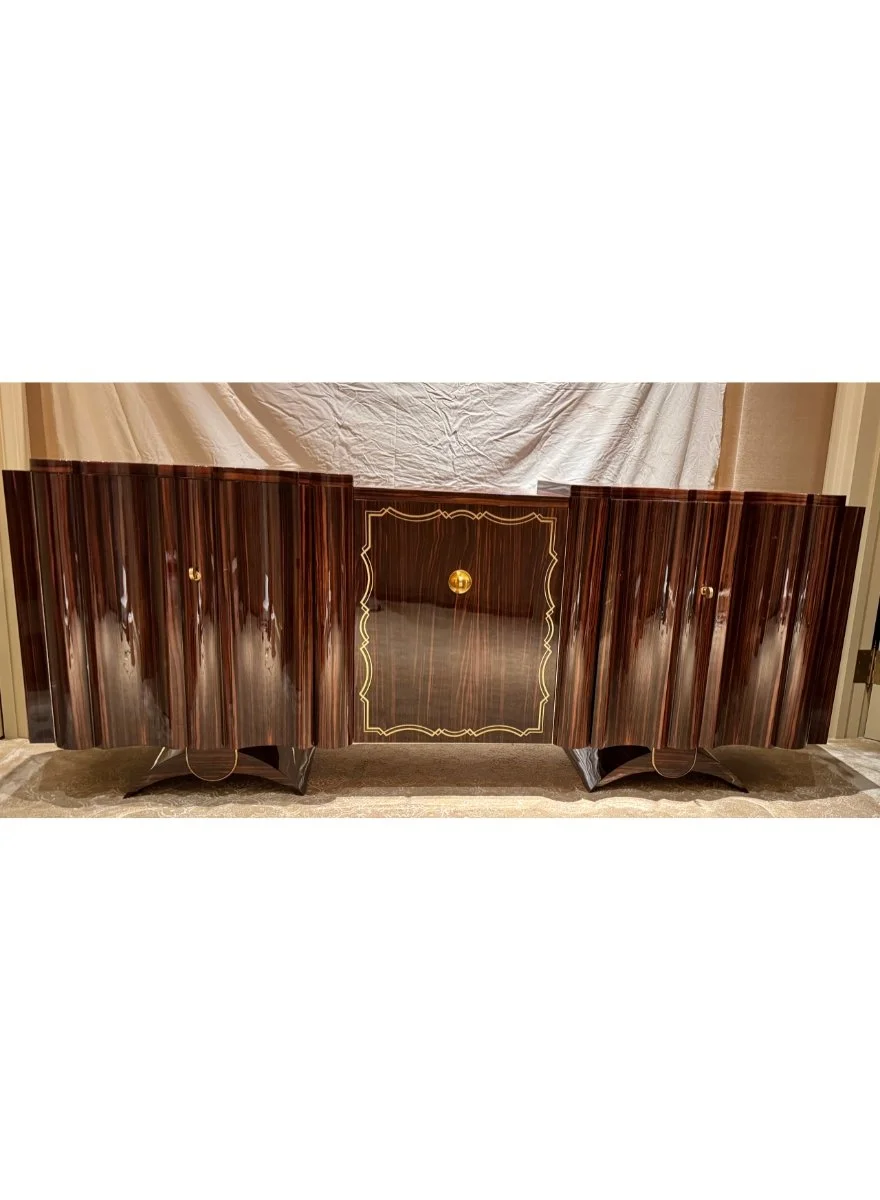 Image 1 of 10
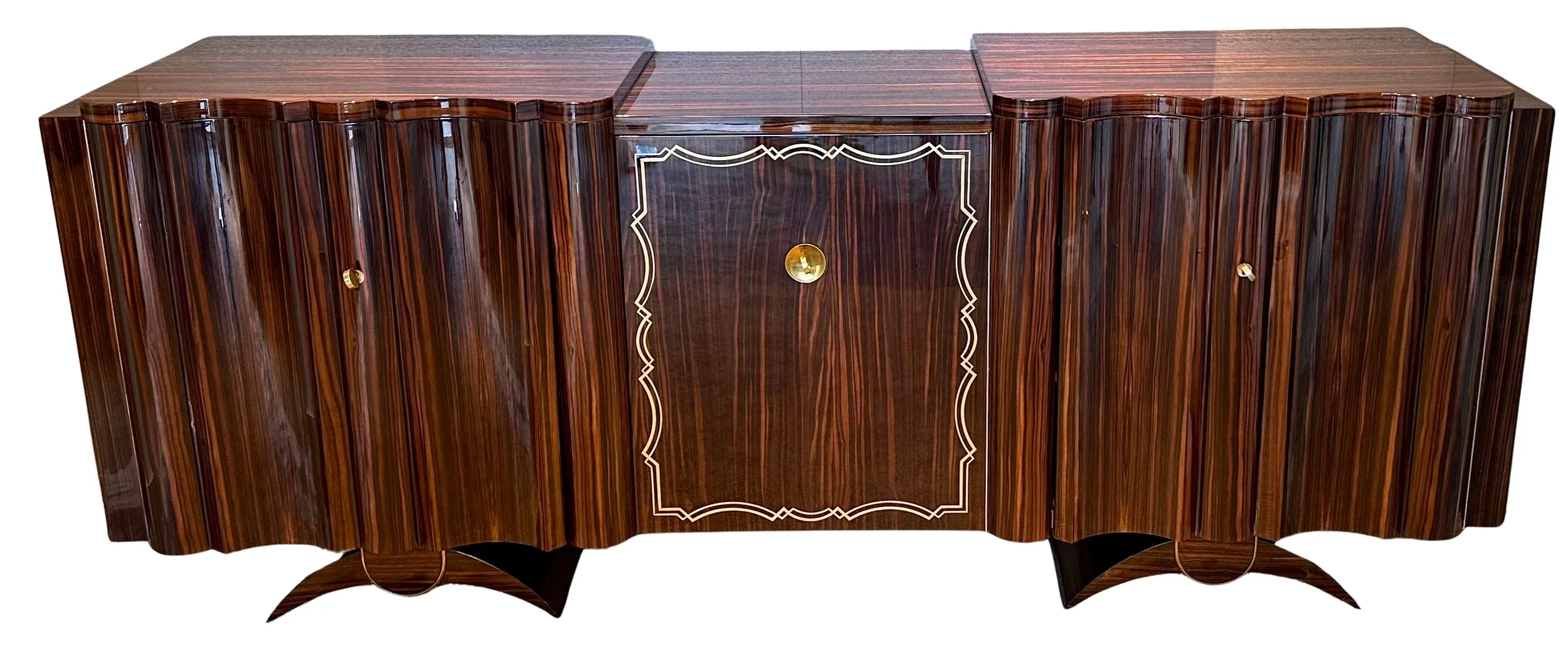 Image 2 of 10
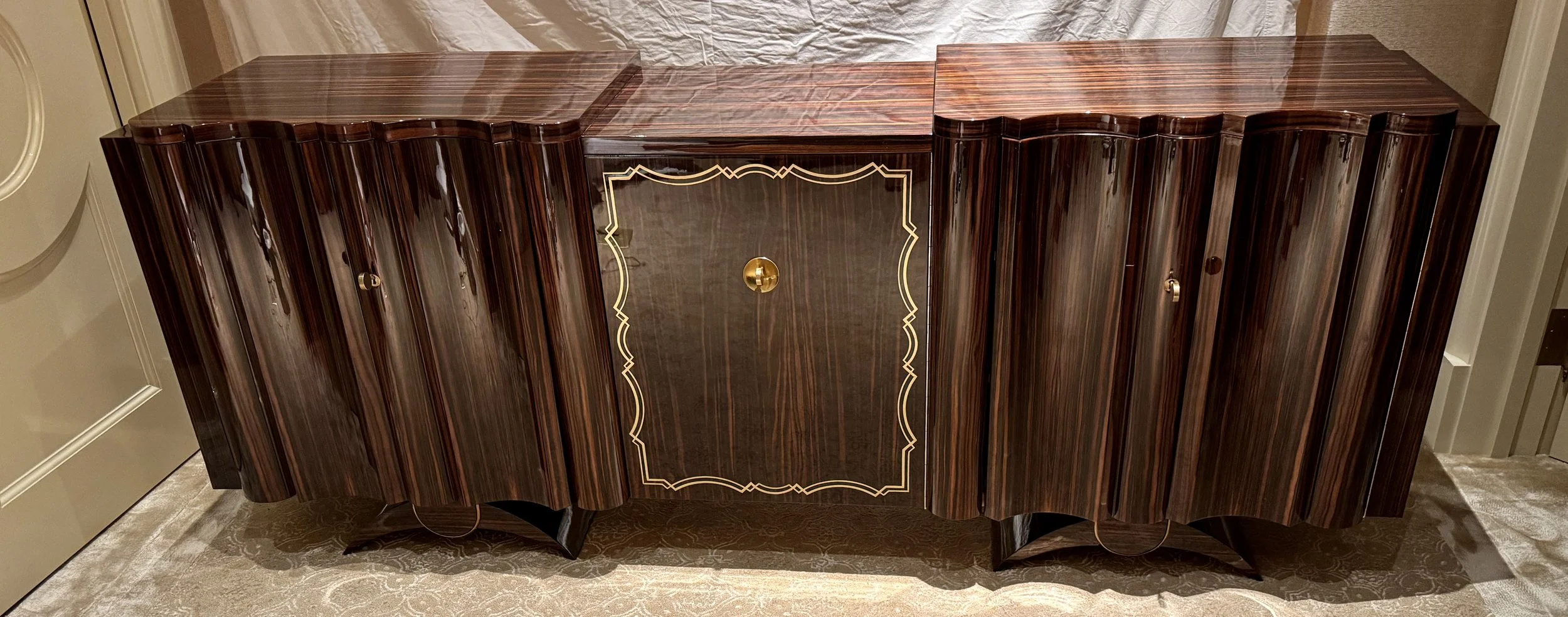 Image 3 of 10
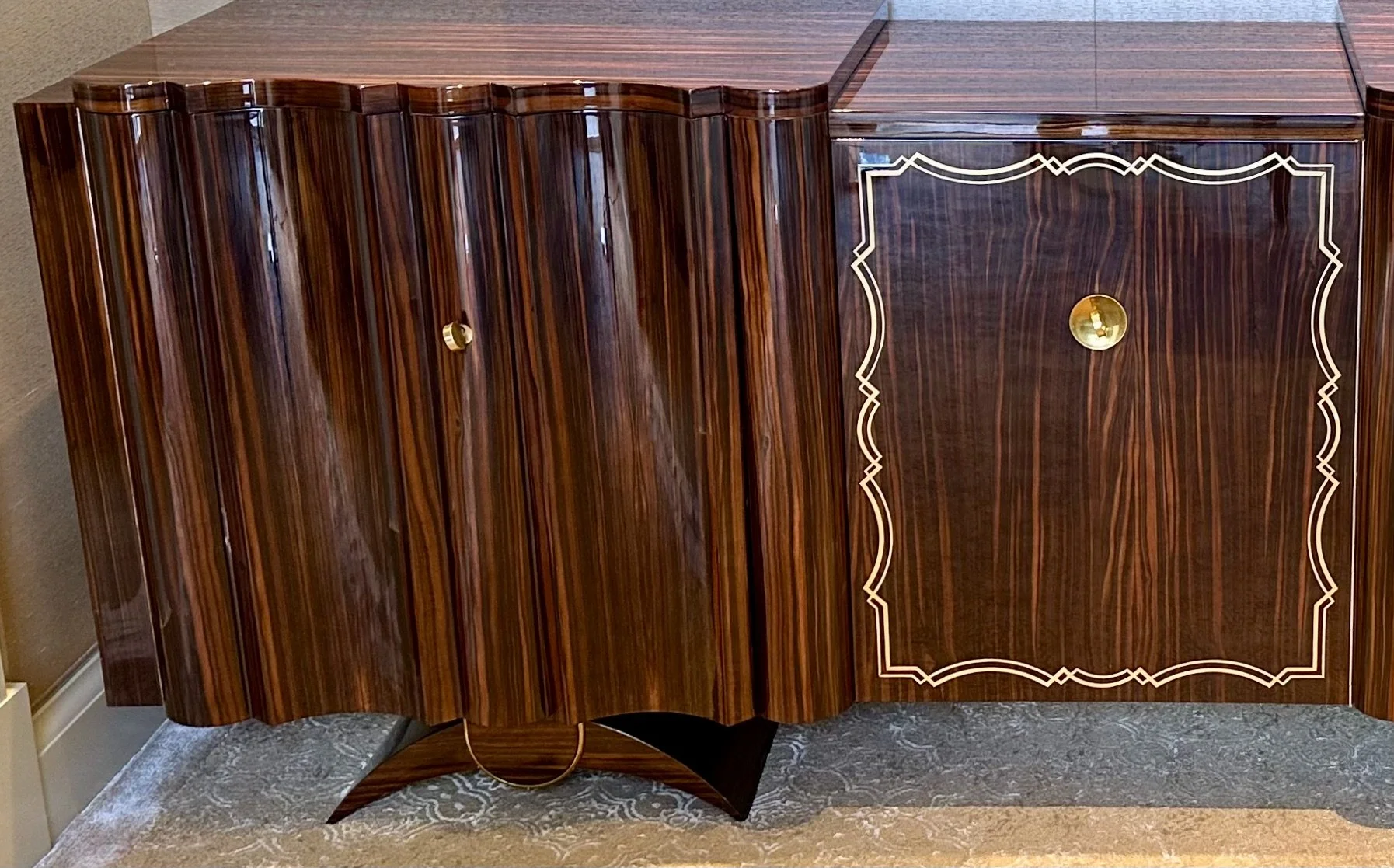 Image 4 of 10
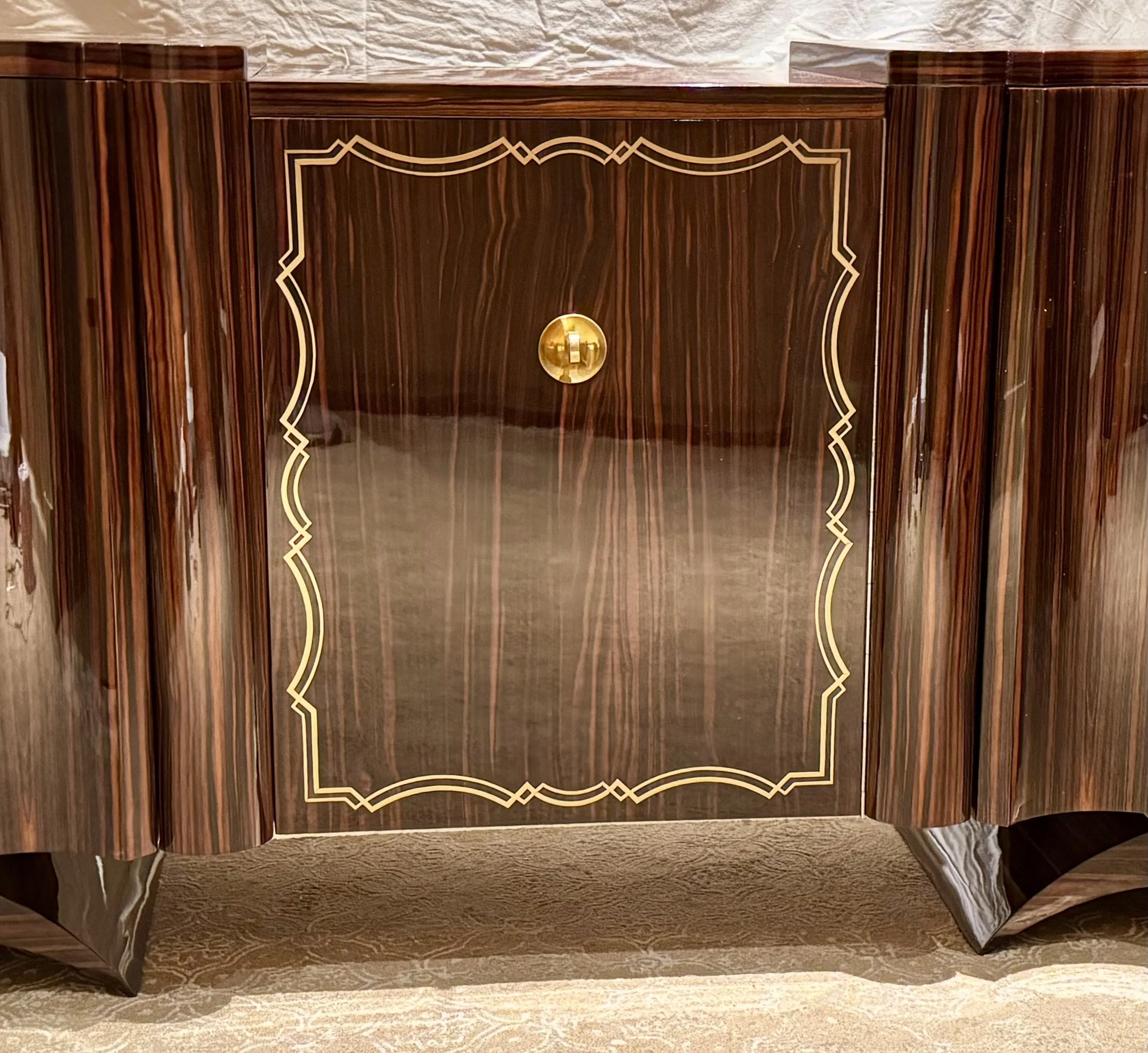 Image 5 of 10
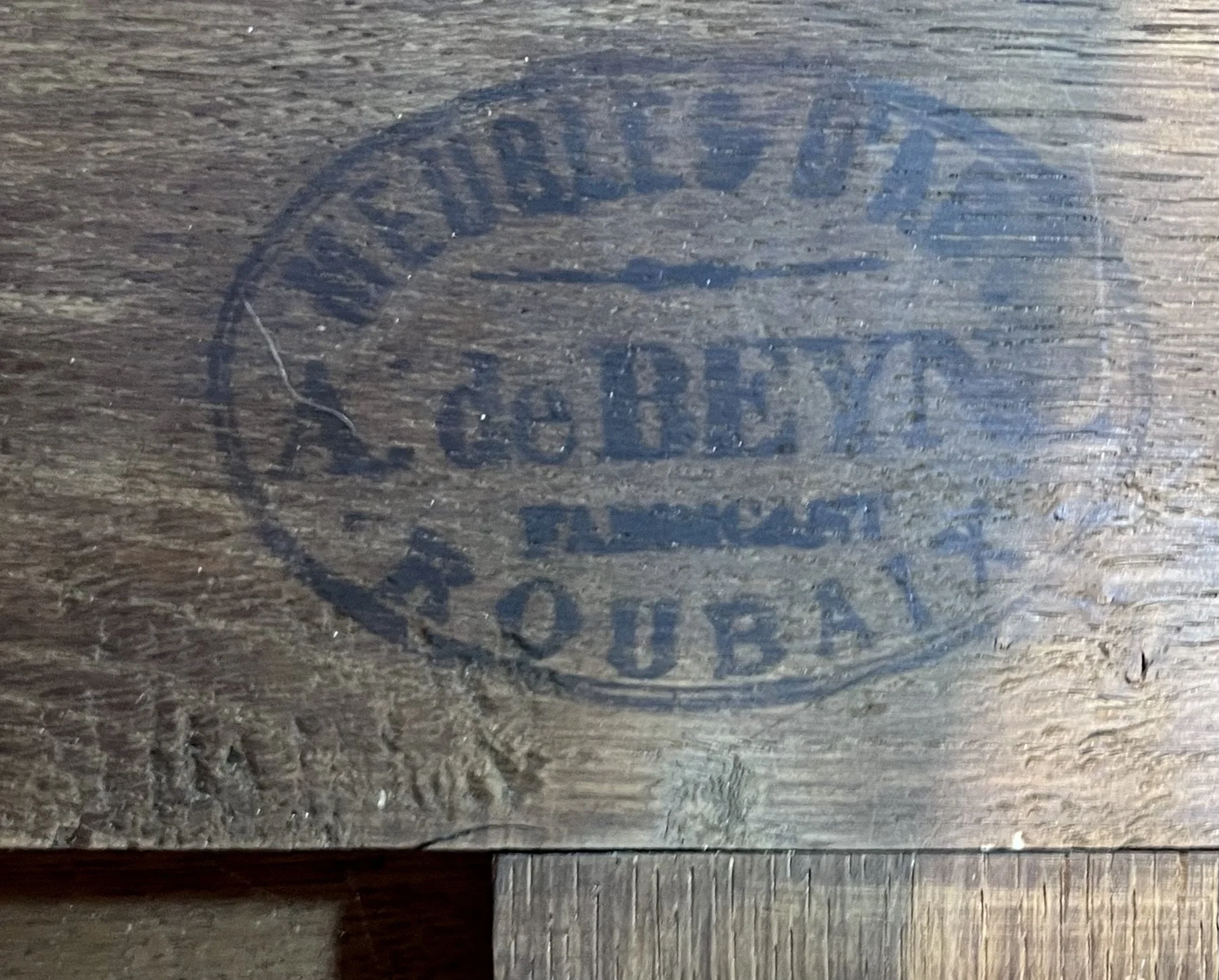 Image 6 of 10
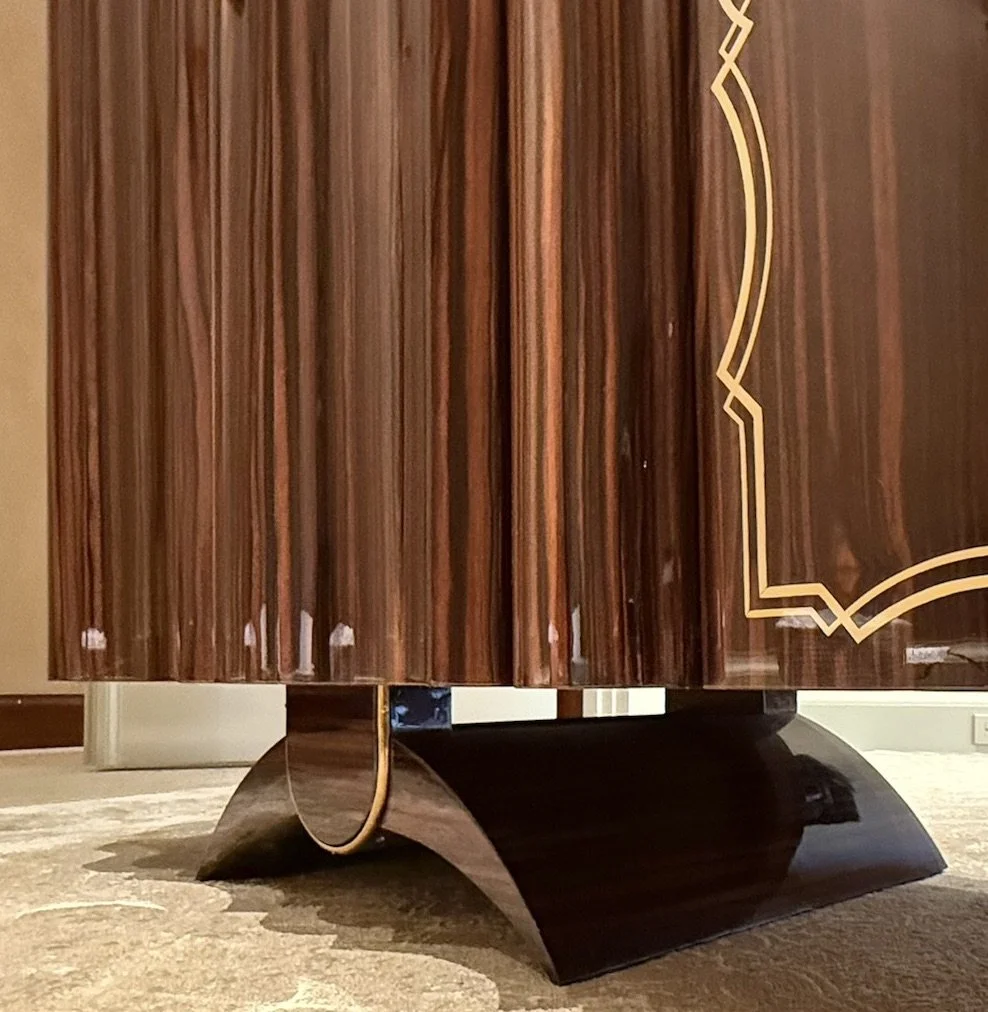 Image 7 of 10
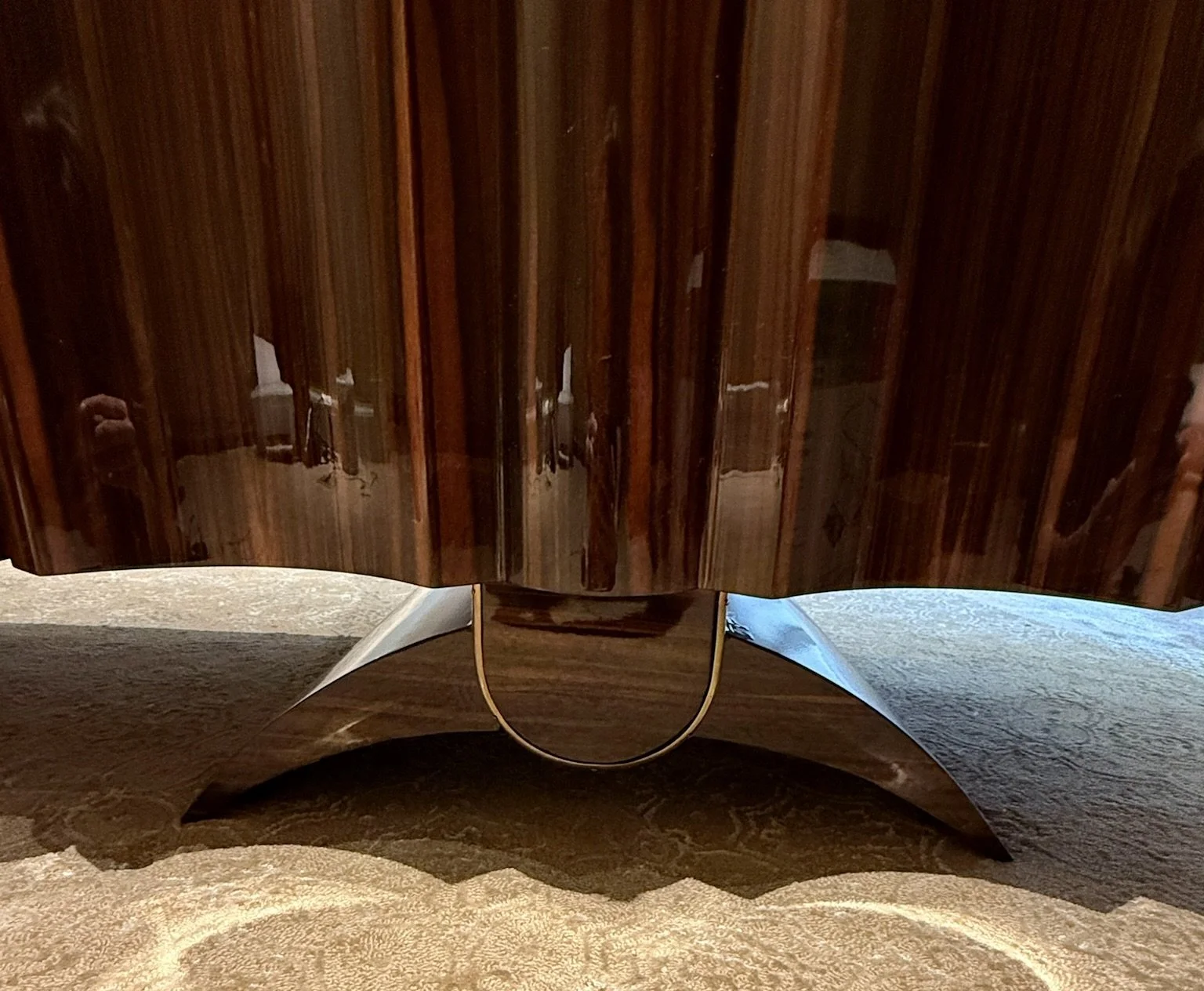 Image 8 of 10
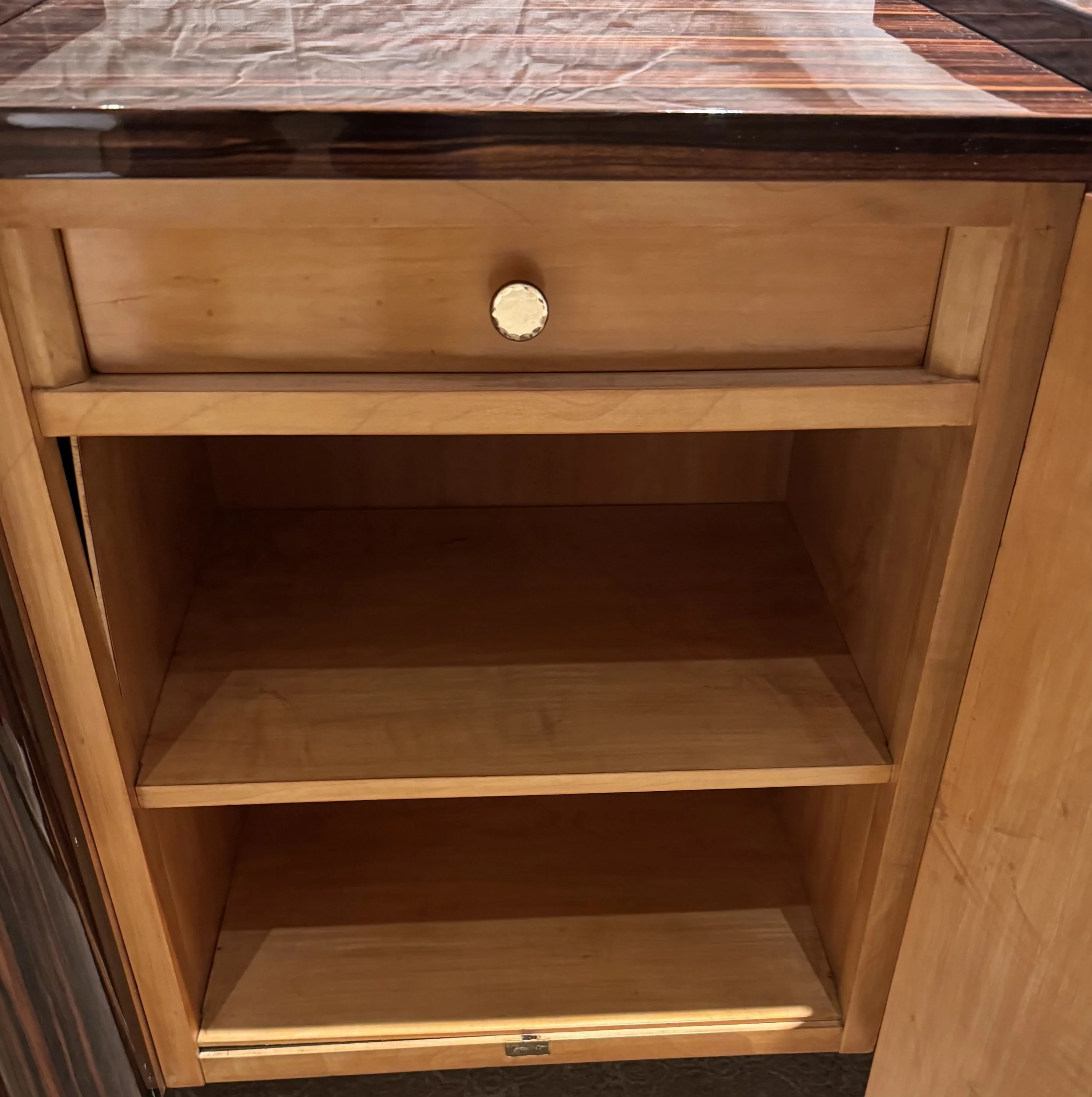 Image 9 of 10
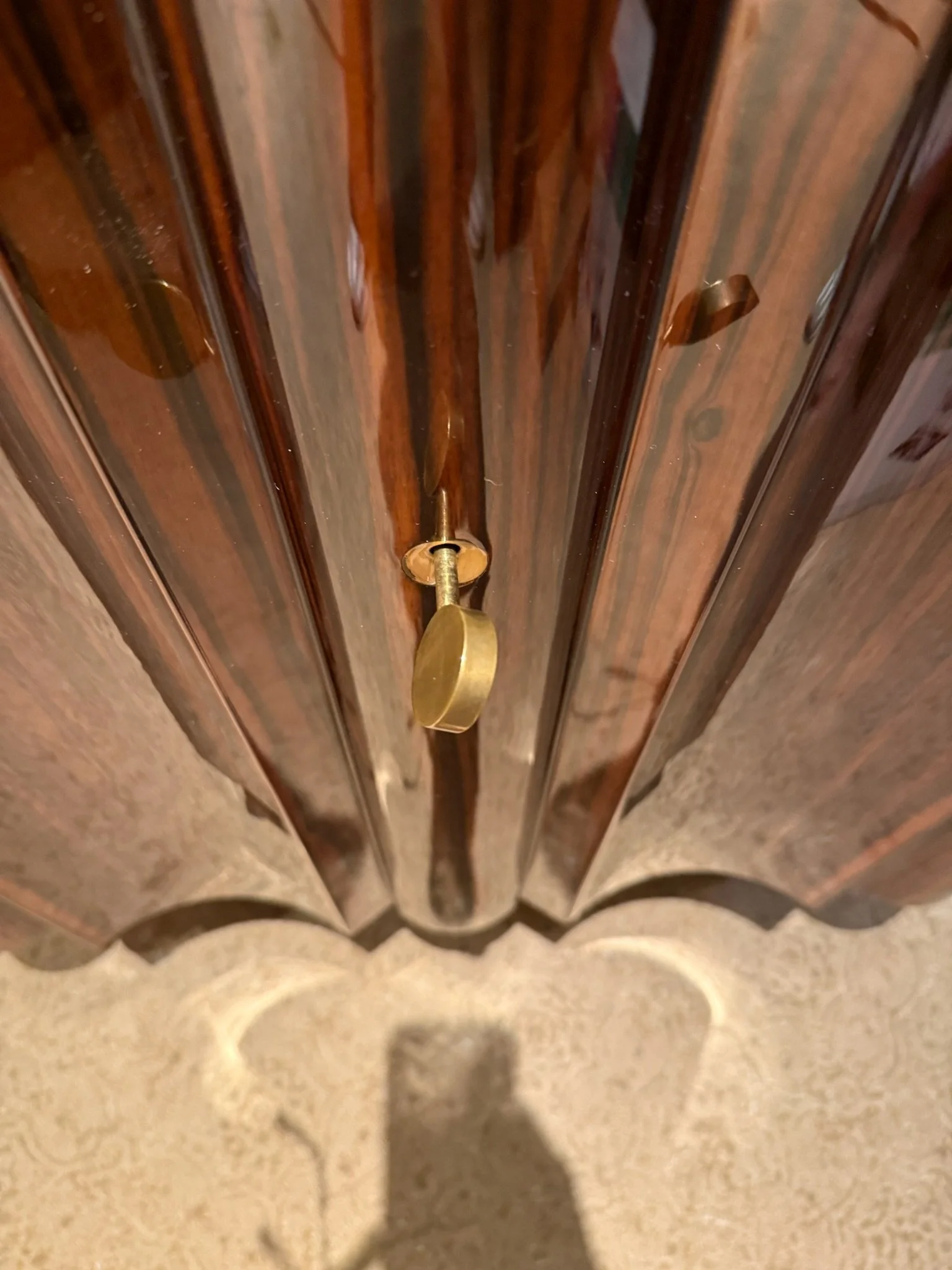 Image 10 of 10